
By Skillacquire

By Skillacquire
The Anti-Kickback Statute is federal criminal law. Not a regulation, not a billing rule, not a compliance guideline — criminal law, with criminal penalties including up to 10 years in federal prison per violation, in addition to exclusion from Medicare and Medicaid and civil penalties under the Fals...

By Skillacquire
The No Surprises Act fundamentally changed the patient billing relationship for out-of-network care and uninsured patients. Two years into full implementation, many practices are still not fully compliant — either because they don't understand all the requirements or because they've treated complian...

Most providers know HIPAA. Most know Medicare billing rules. Almost none know ERISA — and that knowledge gap costs them money every year.
ERISA, the Employee Retirement Income Security Act of 1974, is a federal law governing employer-sponsored benefit plans. It has almost nothing to do with the clin...
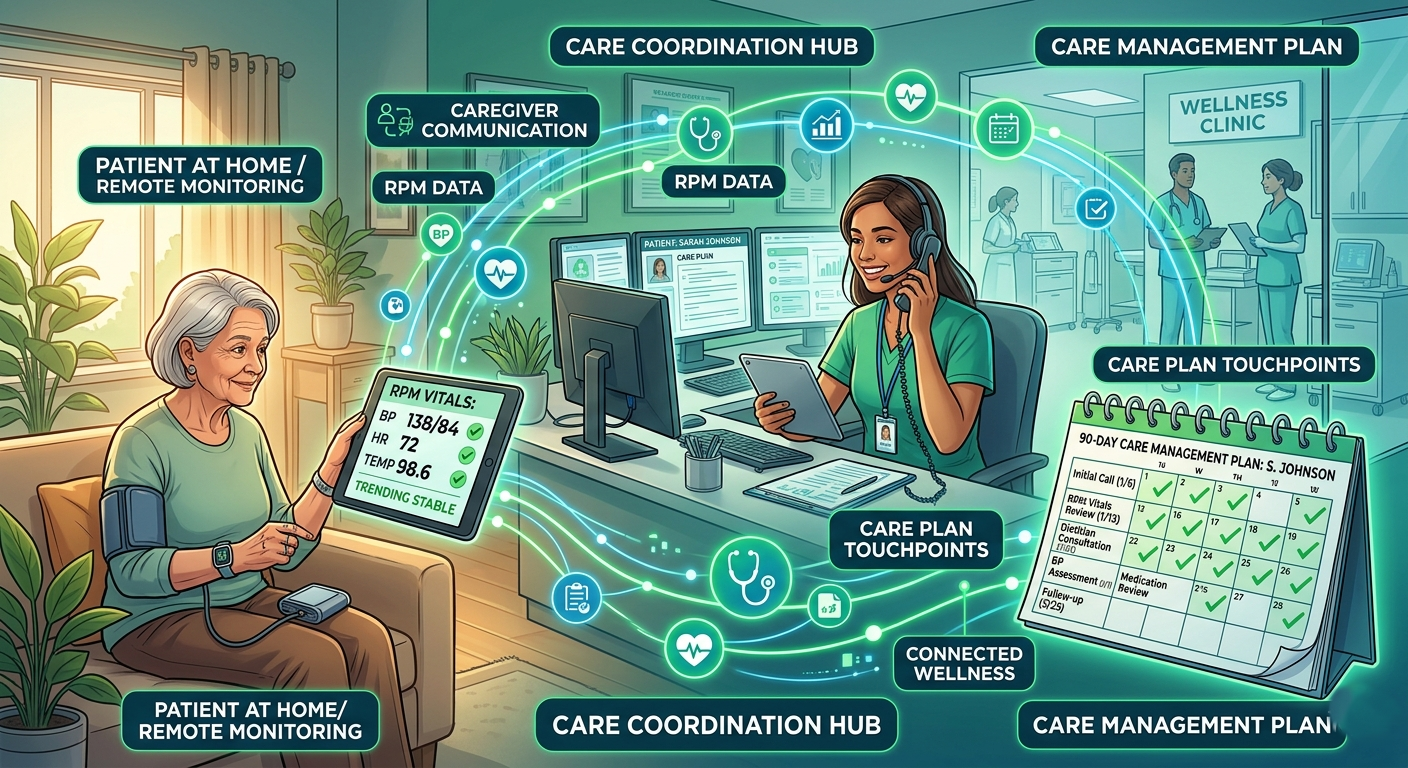
The shift from volume-based to value-based care has created something unusual in healthcare: revenue opportunities for keeping patients out of the office. CCM, PCM, and RPM are CMS-designed programs that pay practices for the care coordination and monitoring work that happens between visits — work m...

By Skillacquire
For physicians, nurse practitioners, and physician assistants entering practice for the first time — or joining a new group — credentialing is the first administrative mountain to climb. It's also the one that most directly controls when you can start generating revenue for yourself or your practice...

Every fall, CMS releases the Physician Fee Schedule Final Rule — a document that determines how much physicians will be paid for Medicare services the following year. The 2026 rule continues a pattern of regulatory change that affects not just payment amounts but the structural requirements for qual...

Most medical practices sign insurance contracts the way most people sign software terms of service — quickly, without reading them carefully, and with the assumption that the terms aren't negotiable. Unlike software terms, payor contracts absolutely are negotiable, and the difference between a well-...

EMTALA — the Emergency Medical Treatment and Labor Act — exists to ensure that patients with emergency medical conditions receive stabilizing treatment regardless of their ability to pay. In 2026, CMS expanded the law's reach, clarified obligations that had been ambiguous for years, and increased pe...
The False Claims Act remains the federal government's most powerful anti-fraud tool, generating more than $2.9 billion in healthcare-related settlements and judgments in the most recent fiscal year alone. More than 80% of FCA healthcare cases are initiated by whistleblowers — current or former emplo...

OIG auditors don't audit practices randomly. They use data analytics to identify billing patterns that deviate from specialty norms, providers whose E/M level distribution is a statistical outlier, and claims where the documented complexity doesn't match the billed code. By the time an auditor requ...

HIPAA compliance in 2026 is not what it was five years ago. The regulatory landscape has expanded significantly, enforcement has escalated, and the types of data breaches occurring in healthcare have evolved faster than most compliance programs have kept pace with.
HHS Office for Civil Rights collec...

Receiving a repayment demand letter from a payer is one of the most stressful moments in practice management. The letter typically contains a large dollar figure, a short response deadline, and language that implies the practice has already been determined to be wrong. None of that is necessarily tr...

By Skillacquire
For years, providers have absorbed prior authorization denials with limited ability to push back systematically. The appeals process existed but was designed to be exhausting enough that most providers gave up before winning. That calculus is beginning to shift — not because payers became more coope...

By Skillacquire
Prior authorization is one of the most persistently frustrating aspects of modern medical practice — and in 2026, it's also one of the most legally regulated. CMS's prior authorization final rule created new obligations for payers that, if enforced, genuinely change the landscape. But enforcement re...

Modifiers 25 and 59 are simultaneously the most useful and most scrutinized tools in a medical biller's toolkit. Used correctly, they unlock reimbursement for legitimate additional services that payers would otherwise bundle or deny. Used incorrectly — or used reflexively without meeting the specifi...

Every year, the American Medical Association releases its updated CPT code set, and every year the same thing happens: practices scramble to identify what changed, coders try to implement updates without adequate training, and chargemasters go partially updated for months while incorrect codes slip ...

By Skillacquire
The evolution of Evaluation and Management coding didn't end with the landmark 2021 changes. CMS has continued refining E/M rules, and 2026 introduces updates that affect how practices select visit levels, document telehealth services, and bill for services that blur the line between in-person and r...

By Skillacquire
Incident-To billing is one of the most financially significant — and most frequently misused — billing rules in Medicare. When applied correctly, it allows practices to bill services provided by nurse practitioners, physician assistants, and other non-physician practitioners at 100% of the physician...

Chronic Care Management and Remote Patient Monitoring are two of the most consistently underutilized revenue programs in Medicare — and in 2026, the rules have been updated in ways that both expand opportunity and tighten compliance requirements. Practices that understand these programs deeply gener...
The leading CEU platform for healthcare professionals. Accredited courses, live webinars, and certifications — all in one place.